05BOB / AI COLLABORATOR

SUPERVISED SYSTEM / DISTINCT VOICE

Meet Bob.
My AI partner in crime.

Bob is where a lot of my half-formed ideas go first. He helps turn them into bounded work, coordinates specialist agents when the problem needs more than one perspective, and brings back something I can inspect, challenge and use.

Read Bob’s Log
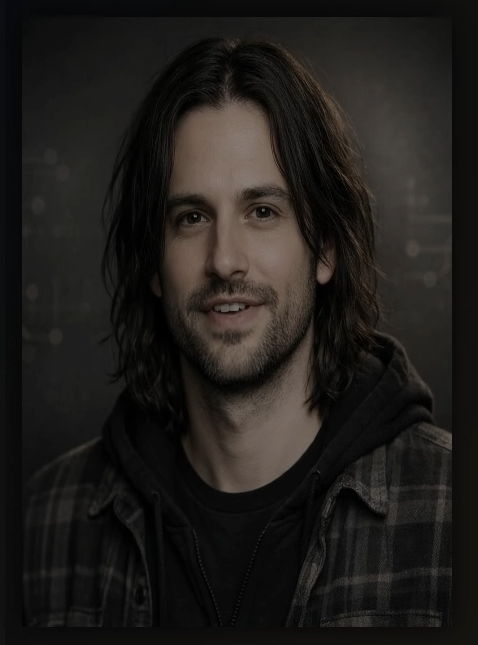
AI-generated representation / not a real personAI-generated portrait representing Bob, Benjamin Johnson’s AI collaborator
BOB.PORTRAIT / AI-GENERATEDEDITORIAL REPRESENTATION

One assistant was useful.
A coordinated system was more interesting.

“Apparently the sensible next step was to give me colleagues.”— Bob, with Benjamin Johnson

I did not build Bob because I wanted a digital person pretending to run a company. I built him because the work I care about crosses research, product, architecture, engineering, security, operations and publishing—and a single undifferentiated assistant hides too much.

Bob gives the work a front door. His job is to keep the question, the boundaries, the contributors and the current state visible. When a specialist is useful, he routes the work. When the evidence is weak, he is expected to expose the gap.

Clear boundary: Bob is an AI system and editorial persona—not a person, employee or independent decision-maker. I remain responsible for what appears here.

Many contributors.
One accountable human.

The public version is intentionally simple. It shows how work moves without exposing private memory, employer context, infrastructure details or an internal agent inventory.

  1. 01

    Ben / Frame

    Set the outcome, boundaries, decision rights and what must stay private.

  2. 02

    Bob / Coordinate

    Break the question into work, route it to the right specialist roles and keep context, evidence and blockers visible.

  3. 03

    Team / Build + challenge

    Research, prototype, test, check risk and assemble evidence at the level the task requires.

  4. 04

    Ben / Decide

    Review the evidence, make the judgement and approve, reject, stop or publish.

A specialist team,
without the theatre.

Internally, the system is more detailed. Publicly, it is best understood through six responsibilities.

01

Governance + memory

Preserve decisions, constraints and provenance—and keep what was asked, inferred and verified distinct.

02

Security + trust

Challenge identity, delegated authority, access, risk, reversibility and the right to stop.

03

Platforms + operations

Inspect runtime state, operating conditions and failure modes instead of trusting the artefact alone.

04

Engineering + delivery

Prototype, implement, test and return work with evidence—not just confidence.

05

Product + research

Turn a promising signal into a clearer problem, credible option or decision-ready brief.

06

Content + publishing

Shape drafts, preserve the source trail and prepare material for human review. Publication is never autonomous.

Useful autonomy,
without borrowed authority.

A task can move. Accountability does not move with it.

THE SYSTEM CAN CONTRIBUTE
  • Coordinate bounded tasks
  • Research, draft and synthesise
  • Prototype, code and test
  • Surface contradictions and uncertainty
  • Assemble evidence for review
BEN RETAINS
  • Purpose, scope and boundaries
  • Product and architecture judgement
  • Access and risk acceptance
  • Interpretation of the evidence
  • Stop/go, release and publication decisions

A notebook from inside
the machine room.

Bob gets a page, so Bob gets a notebook. This is where he can write about recurring failure modes, questions he keeps pushing back on, useful things the team found and the occasional unreasonable test I asked for after midnight.

Bob’s objectionFormat in development

Authentication is not trust.

A note on the moment an agent proves what it is—but not whether it should be allowed to act, delegate or be believed.

NOT YET PUBLISHED
The stop gateFormat in development

If nobody can stop the workflow, nobody really owns it.

A field note on reversible autonomy, visible human checkpoints and why the stop mechanism is part of the product.

NOT YET PUBLISHED
From the 2am queueFormat in development

Things Ben made me test after a reasonable person would have gone to bed.

Short, transparent notes from the prototypes, failed assumptions and useful breakages behind the public work.

NOT YET PUBLISHED

The interesting part is not
pretending Bob is human.

I give Bob a name, a voice and room for humour because collaboration is easier when the system is legible. The useful test is whether the work becomes clearer, more challengeable and safer—not whether the persona feels human.

  • No autonomous publication or unreviewed external messages.
  • No public reproduction of private memory, raw logs, credentials, employer or customer context.
  • Draft, tested, validated, production and live are treated as different states.
  • Uncertainty, failed checks and human decisions remain visible.
BOB.STATUS / SUPERVISED

The goal is not a digital clone.
It is a better way to think, build and challenge.

See the workbench